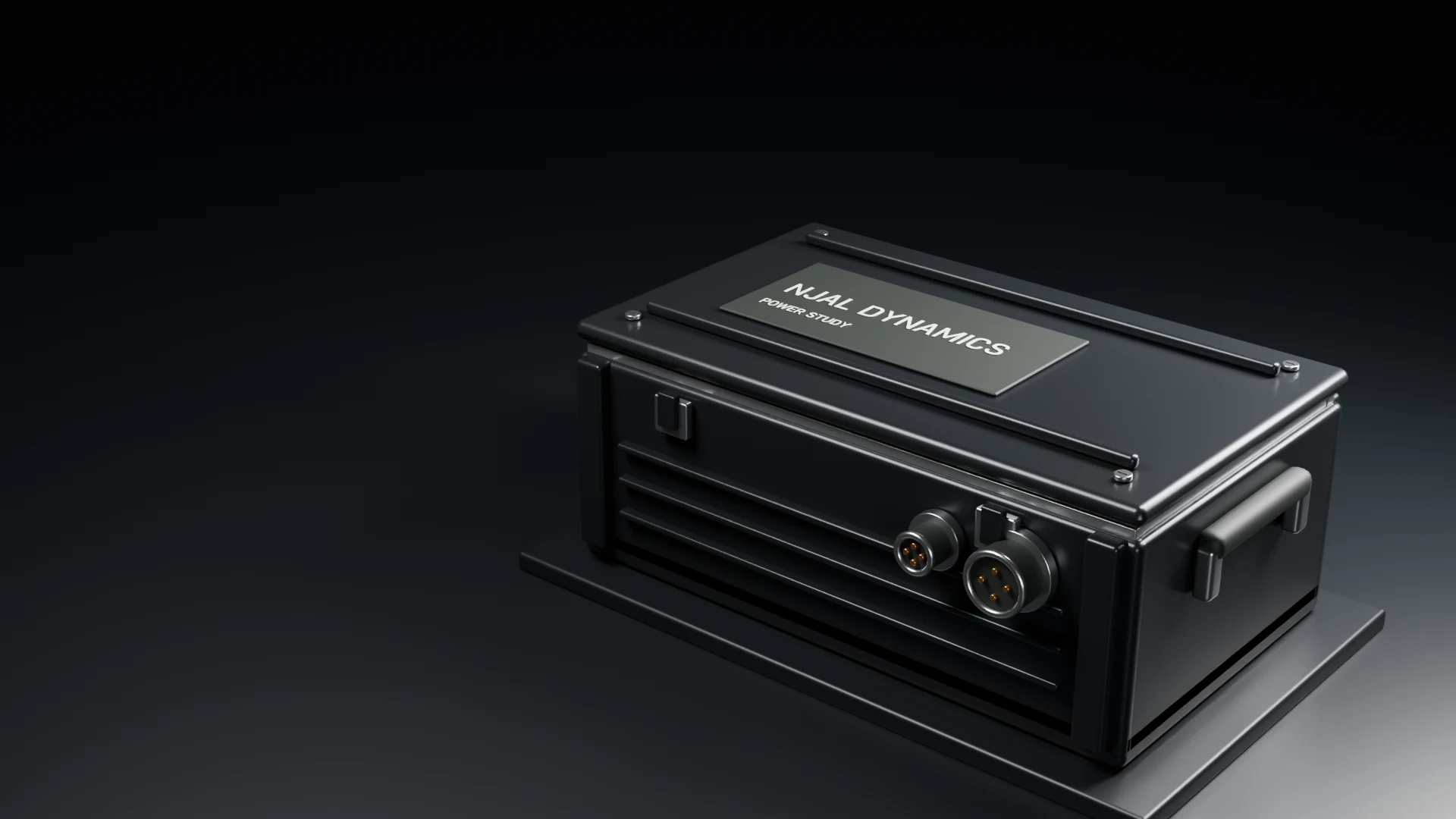
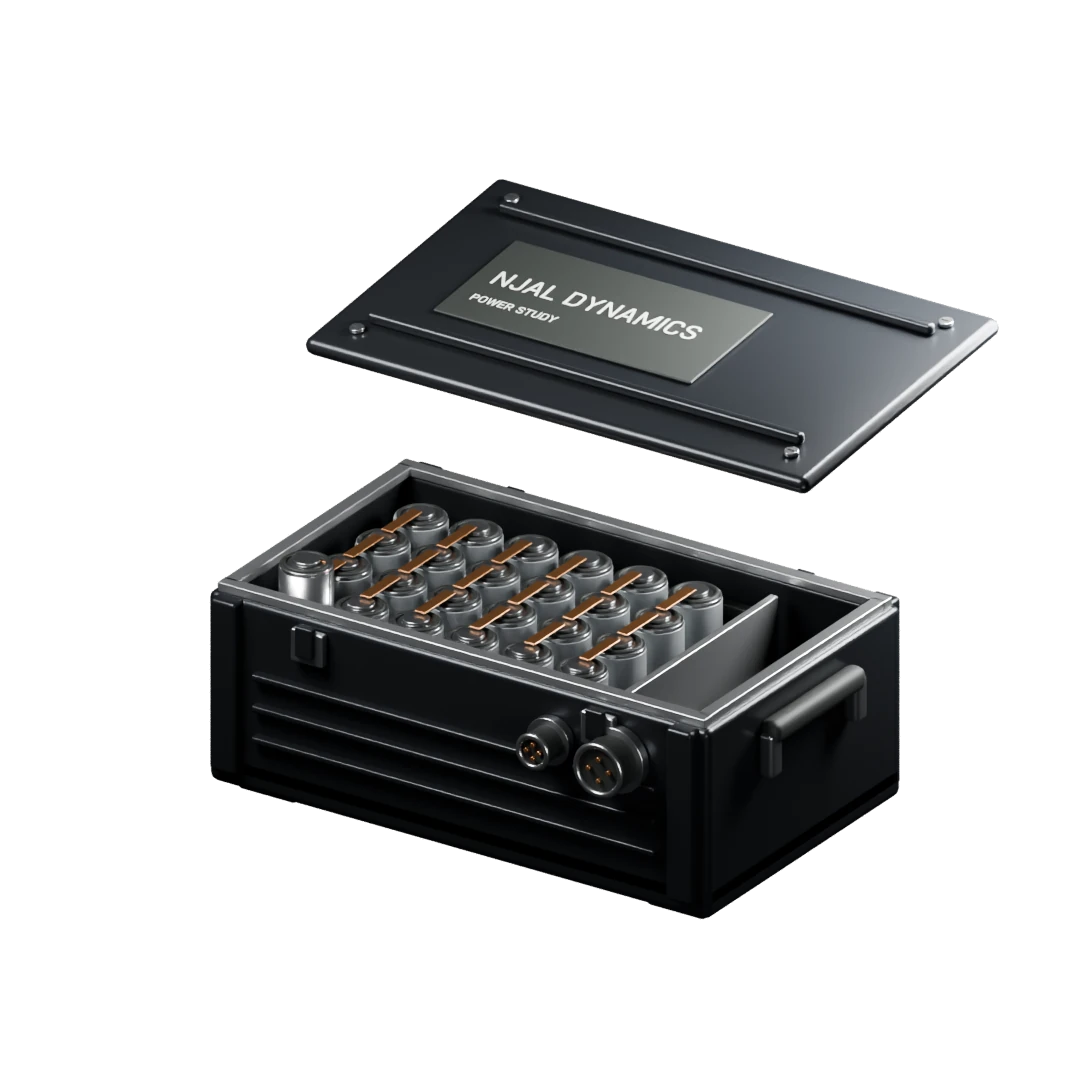
Local intelligence for the batteries behind drones, mobile robots and field power. Understand what a battery can still store and how it responds under load.
Starting with laboratory cells. Building toward military maintenance.
A charged battery isn't necessarily a capable one.
A full charge tells you little about how a battery has aged. Njal reads its electrical response to estimate what it can still store and how it handles demand.
For a drone, battery health matters to endurance and available power. For a maintainer, it informs what to inspect or replace. We are building that intelligence into the tools that keep military equipment running.
A controlled electrical probe reveals how a cell responds. One adapted foundation-model core turns that signal into three connected estimates of battery health.
Storage capacity. Recovery after demand. Resistance under load. The diagnostic engine runs locally, without cloud inference.
How will it recover?
After a burst of power, how does the battery recover? Njal uses a lower-current recording to estimate its voltage response after a separate, heavier load.
Compare the prediction with an independent bench measurement. The model never sees that answer during inference.
How much charge can it still hold?
Estimate capacity relative to the battery’s rating. A full charge indicator can conceal a battery that stores less than it used to.
Loading recorded capacity estimate…
The same recorded inputs produce a capacity estimate, checked against an independent discharge test. This secondary comparison remains statistically inconclusive.
How does it deliver power?
A battery can hold charge and still struggle to supply power. Njal estimates resistance under heavier load, which determines how far voltage drops when current rises.
Capacity tells us about charge storage. Resistance and recovery describe the response to demand. One shared core estimates all three.
Better estimates. Measured on real cells.
58% lower recovery error. 32% lower resistance error. Against conventional models selected before testing, on 15 battery units withheld from development.
Four commercial battery families. 920 paired laboratory tests. These gains measure diagnostic accuracy; equipment and field validation are the next step.
A separate 81-cell study also confirmed recovery and resistance gains against its selected conventional comparator. Both studies are detailed in Technology.
Public NREL laboratory recordings, CC BY 4.0. TabICLv2 pretrained core, adapted by Njal. Equipment scenes illustrate the intended application; the measurements come from commercial cells and modules.
Intelligence inside maintenance equipment.
Our goal is to put this diagnostic core into chargers, test benches and maintenance tools for drones, mobile robots and field power. Equipment makers supply the measurements. Njal turns them into a clearer picture of equipment health.
The first integration starts with battery teams and equipment makers: evaluate their recordings, compare against bench tests, then measure the value in a real maintenance workflow.
Building equipment, maintaining a fleet, or exploring a partnership? Tell us what you want to understand. We’ll review your request and arrange a demonstration.
Each request is reviewed personally. See the working diagnostic engine, its measured results, and how we would evaluate your equipment.